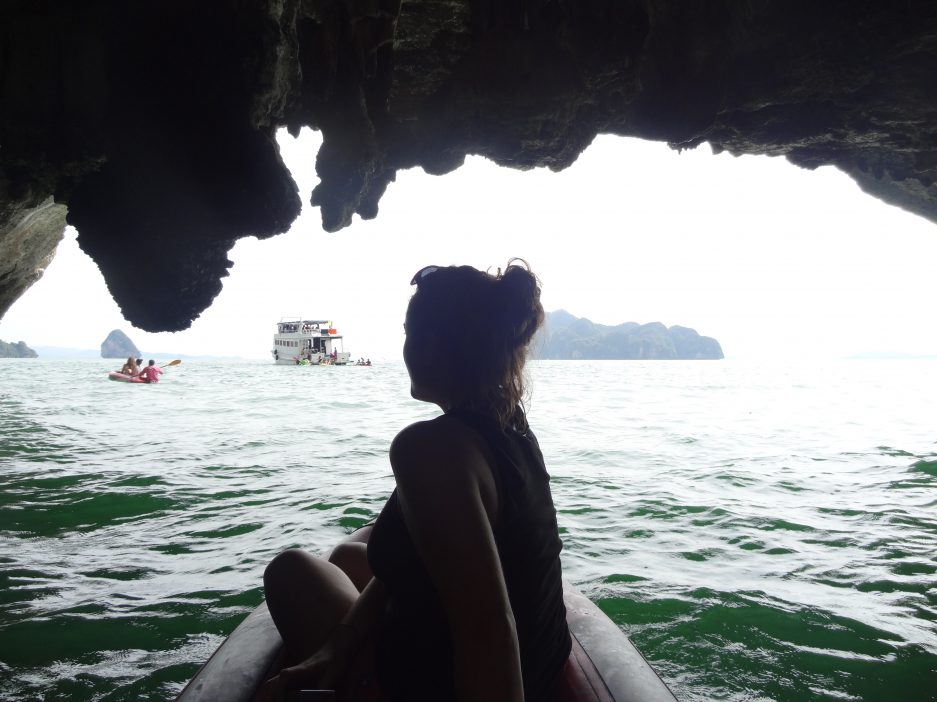
It doesn’t get more Cuban than patiently waiting for our continuously delayed flight, sipping on Cristal (the local beer, not fancy champagne) while trying to compile 2 weeks worth of memories of this enchanted, forgotten, and forbidden country.
When we first arrived in Cuba we honestly had no idea what to expect. We came for the scenery & culture but ended up getting so intrigued by the politics of the country that we ended up spending a lot of our wifi time (I’ll get into that later) doing research on the Cuban Revolution, the history of the country, the key revolutionary players, and how this all lead to current day Cuba. As an American, the only real connection to Cuba is through the brief overview you might learn in school of the revolution, or through online pictures of the old cars and buildings that show how Cuba is “frozen in time” or stuck in the past- and that holds true for more than just objects, it also refers to how everything is very slowwwww and inconvenient compared to what we are used to. We had our first test of patience when we had to wait at least an hour to retrieve our luggage at the airport. It’s something you have to get used to so no better time than when you first arrive! This trip is one that many Americans haven’t had the opportunity to experience so I was beyond excited to be in Cuba from the minute we touched down and stepped out into the thick Caribbean heat.
We decided to make accommodations at a Casa Particular, which is where you rent a room in a house and stay with a Cuban family. Tons of families do this as their primary source of income throughout all the major cities and we felt this was a better experience than a hotel because the families we stayed with were SO helpful in giving us valuable info and insider tips. It’s also usually more affordable than a hotel. We stayed in Casa Particulars the entire two weeks and every time we visited another city, we would have our current Casa call up a friends or family so that we had a place to stay when we arrived in the next city. Our first Casa in Havana was with Jorge & Isabell in the Old Havana neighborhood. Old Havana is the neighborhood that had the most charm of neighborhoods we visited, in my opinion. European architecture dominates with detailed finishings, columns, vibrant colors, classic plantation shutters, and even the deteriorated and crumbling buildings still have that last bit of elegance. Then of course add in a classic 1950’s car and the palm tree backdrop and it’s hard to put your camera down. It’s like you’re on the set of an old Hollywood movie. The entire country, specifically Havana, was an overload for the senses and I think more so for us being American and not really having access until recently.
Culture:
Every morning we started our day off with Cuban coffee prepared by our Casa Mamas, since the women of the cases predominately take care of the guests, with the exception of Roberto at our last Casa, although we came to the conclusion that his wife must have been out of town because he didn’t seem to be as hospitable. If we didn’t have coffee in the morning we would make it a mission to stop into one of the many cafes along the street to get some. It is the best and will have you charged up the entire day. We also would head to a hotel, a park, or the middle of the street to use wifi. These are the only places where wifi is located for use by all people, Cubans and tourists, and you always know when you’re in a wifi hot spot because all of a sudden you’ll see a congregation of people on their phones. No one in Cuba has wifi in their homes and when we read online before visiting about having to go to the park we were cracking up, but it was totally true. As a tourist, you have to purchase a wifi card which is $2 (more expensive if you buy from a hotel) and you get an hours worth of time that can be used intermittently as long as you sign off each time. It was a nice break being disconnected from the real world (apparently a lot of important things were happening that we weren’t aware of #brexit) but also interesting since every time you want to go online you have to venture out and be conscious of your one hour time limit. In two weeks we probably bought about ten wifi cards per person.
Another interesting part of the culture was the two currencies. Basically, one is for locals and one is for tourists. The tourist currency, called the Convertible Peso or CUC, is worth more and is what is expected from tourists. It also has a one-to-one ratio with the U.S. dollar, so things aren’t much cheaper as a tourist, although it is cheaper than U.S. prices at home. The Cuban Peso is for locals and it’s what the majority of Cubans get paid in, with the exception of some people who work in tourism (Casa Particulars, tips at restaurants, etc). It’s best to try and convert some of your CUCs into CUPs to buy street food, take the bus, etc. because it’s much cheaper. Some places will notice you’re a tourist and make you pay in CUCs and they are allowed to discriminate. We thought it was the most bizarre thing ever because we’ve never been to another country that has two currencies. Even though the locals get paid the majority of their wages in Cuban Pesos, a lot of consumer goods are sold in Convertible Pesos making it extremely expensive for locals since the Convertible Peso is 25 times the amount of 1 Cuban Peso.
Havana:
We hit up the usual tourist spots in Old Havana which come highly recommended because, hey, we are tourists- La Floridita, a daiquiri spot made famous by Hemmingway that has a statue in his honor and also a photo of him and Fidel hanging right behind on the wall. It’s so touristy that we ran into BonJovi and met a fellow traveler from the U.S. who helped Cara secure a photo with her hometown idol. We strayed away from the tourist route for some local nightlife and ended up at Cafe Tilin where we saw our WCW’s- Son de Clave (not sure if that’s their correct name after asking several people)- a girl salsa band that was by far the most talented musical act of the trip.
During the day in Havana we decided a tour of the city in a classic hot pink Buick Century would be the “cooler” option than the double decker bus, given that the car’s appearance was the same from 60 or so years ago. While roaming through the city we noticed a lot of cold stares from locals hanging on their front steps or in the streets, some people ended up being warmer than others and interested in making conversation or helping with directions. We also noticed that there wasn’t one western chain store in sight (and we noticed this throughout the entire country), and it was a refreshing experience. The food is traditional Caribbean unless you go to a fancy hotel or restaurant. Most of the street food is ham and cheese, pressed sandwiches, rice, beans, plantain, chicken, pork or beef. I must have eaten more jamon y queso (ham and cheese) sandwiches than I have in my entire life. The only thing we noticed from back home was a can of Pringles, which sold for about the same or more than the U.S. Towards the end of the trip we ate A LOT of Pringles since we were starting to miss the familiarities of home. We smoked our first Cuban cigars at Bar Maximo around the corner from our Casa and then grabbed some beers to take with us across the street to the famous Malecon (the highway that runs alongside the bay) and hung out there with other locals who were drinking, talking, or fishing in the moonlight.

Viñales & Trinidad:
Viñales was my favorite place to visit aside from Havana. It’s the countryside and it’s absolutely stunning. Waking up and having breakfast with lush mountain vistas in the background doesn’t get any better. We were lucky to link up with a local guide to take us on a hike through the farmlands, mountains, caves, and most importantly, to visit the Casa de Tobacco and meet a farmer who grows tobacco and hand rolls it. Cuban farmers have to give 90% of their tobacco crop to the government (in return for no compensation) and the government then processes the tobacco and sells it under big brand names for a much higher price. Most farmers end up not growing tobacco since they are only left with 10% to sell themselves. Viñales is a small, quiet town where you’ll see horse carts and oxen on the same street as 1950’s Ford cars. We were lucky to hang with our tour guide who invited us out to the local Casa de la Musica for live salsa and Havana Club rum.
Trinidad was lovely as well with its charming cobblestone streets and multicolored houses. We ended up visiting at just the right time for Carnival weekend where we joined the locals for music, dancing, drinking, and the parade. Trinidad is on the coast where the beaches are located and we rented bikes to cruise along the peninsula and enjoy the tranquil white sandy beaches. We were channeling our inner Lance Armstrong for that intense ride back into town during the rain!

People & Politics:
It was interesting to see local peoples’reactions when we told them we were from the US. Most responses were, “really?” or a stunned facial expression. Some people were very excited we were American and were happy that Cuba had “another friend.” One man we spoke to on the Malecon didn’t understand why we would want to come to Cuba and we ended up having conversations with locals about the country from their perspective. They do have pride in their country but also shared their grief about how the government is run, how people don’t care about their jobs since there’s no monetary incentive, the lack of access to the outside world, the fact that they can’t really travel outside of Cuba without an invitation and approval from another country. Most are denied even the smallest opportunities we take for granted. Food and other items at the local markets are rationed and items such as rice, beauty products, candy, etc. are kept behind the counter. Things also run out quickly, whether you wanted to buy toilet paper at the market or you’ve been wandering around in the heat and stop to enjoy your favorite flavor of ice cream at the Heladería, when there isn’t any left for the day, that’s that.
Fidel & Raul Castro, along with Che Guevara and a handful of others truly revolutionized Cuba at the very beginning, taking away the tyrannical power that once ruled and giving it back to the majority of Cubans who were severely neglected and suppressed. A lot of social injustices at the time were fixed, but modern day Cuba doesn’t seem to reflect those ideals. Throughout our bus rides from city to city we saw tons of revolutionary propaganda signs, billboards, murals from 60+ years ago that are still all over the country, loved by some and despised by others. It’s interesting to visit a communist country when we come from a place at the opposite end of the spectrum where capitalism has been running through our blood from the time we’re born, which has its own flaws, and it shows that no government will ever be perfect.
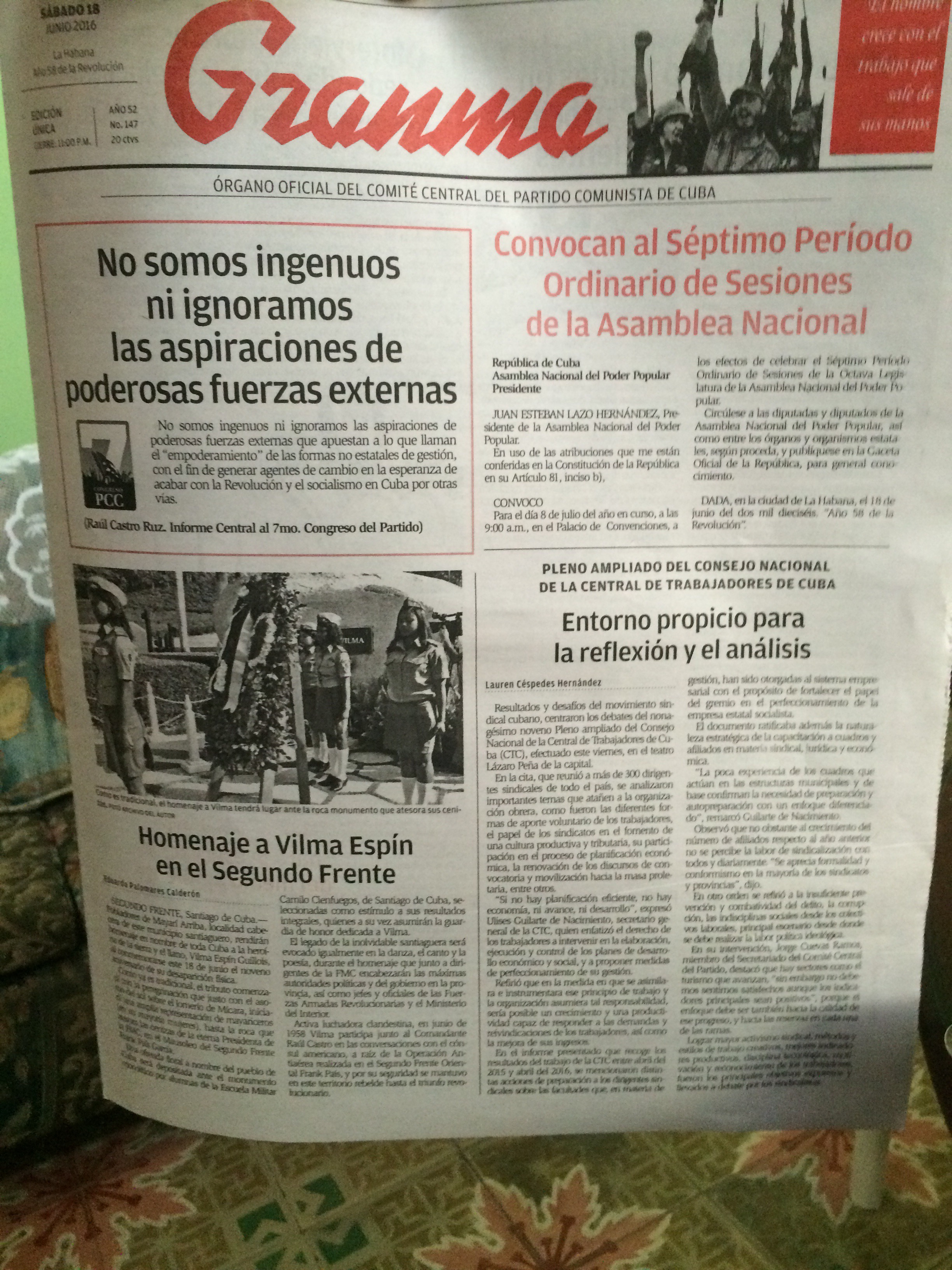
Cuba was overall an awesome experience and I’m glad we added this to the World Tour itinerary as it wasn’t part of the original plan. Would I visit again? Maybe in the far future. Two weeks was honestly enough time to see the country and experience the culture, and I was ready for the next adventure in Colombia!
 The Adventures of Jenny Quest